AI Fantasy Porn Prompts: Elves, Sci-Fi & Monster Styles (2026)
November 10, 2026
🔞 18+ Only: This guide covers prompting techniques for fantasy-themed adult AI imagery. All examples describe fictional adult characters. You must be of legal adult age in your jurisdiction to use any of these tools.
Fantasy is where AI image generation quietly outperforms every other style. Photorealism fights the uncanny valley; anime fights same-face syndrome. But fantasy — elves, sci-fi operatives, dark sorceresses, cyberpunk mercenaries — plays to the models’ strengths: imaginative anatomy, dramatic lighting, elaborate costumes, and environments no camera could capture. Some of the most striking adult AI art being made in 2026 isn’t realistic at all.
This guide is a prompt cookbook for fantasy adult imagery: the subgenres that work, the style keywords that actually move the needle, the anatomy pitfalls unique to non-human subjects, and how to keep every character unambiguously adult. Pair it with our AI porn art styles guide for the broader style landscape, and test everything on SpicyLab’s AI porn generator — one free watermark-free Standard trial per IP, no signup.
⚡ The Short Version
- Fantasy has four reliable subgenres: high fantasy (elves, royalty), dark fantasy (sorceresses, gothic), sci-fi (cyberpunk, space operatives), and mythic (goddesses, sea/nature spirits).
- Style keywords do the heavy lifting: “intricate armor filigree,” “bioluminescent,” “cinematic rim lighting,” and “epic composition” change results more than longer character descriptions.
- Anchor the adult signifiers explicitly: “adult woman,” “mature,” defined age cues — fantasy art styles skew youthful by default, so counter it deliberately in every prompt.
- Non-human anatomy needs extra negatives: pointed ears, horns, wings, and tails multiply the usual extra-limb failure modes — add targeted negative prompts per creature feature.
- Environment sells the fantasy: half the prompt weight should go to setting, lighting, and atmosphere — that’s what separates “person in costume” from “fantasy art.”
- Iterate the setting, not the character: lock a character description you like, then vary only the environment keywords across generations.
1. The Four Fantasy Subgenres That Work
Not all fantasy prompts are equal. These four have the deepest model training data behind them, which means the most reliable output:
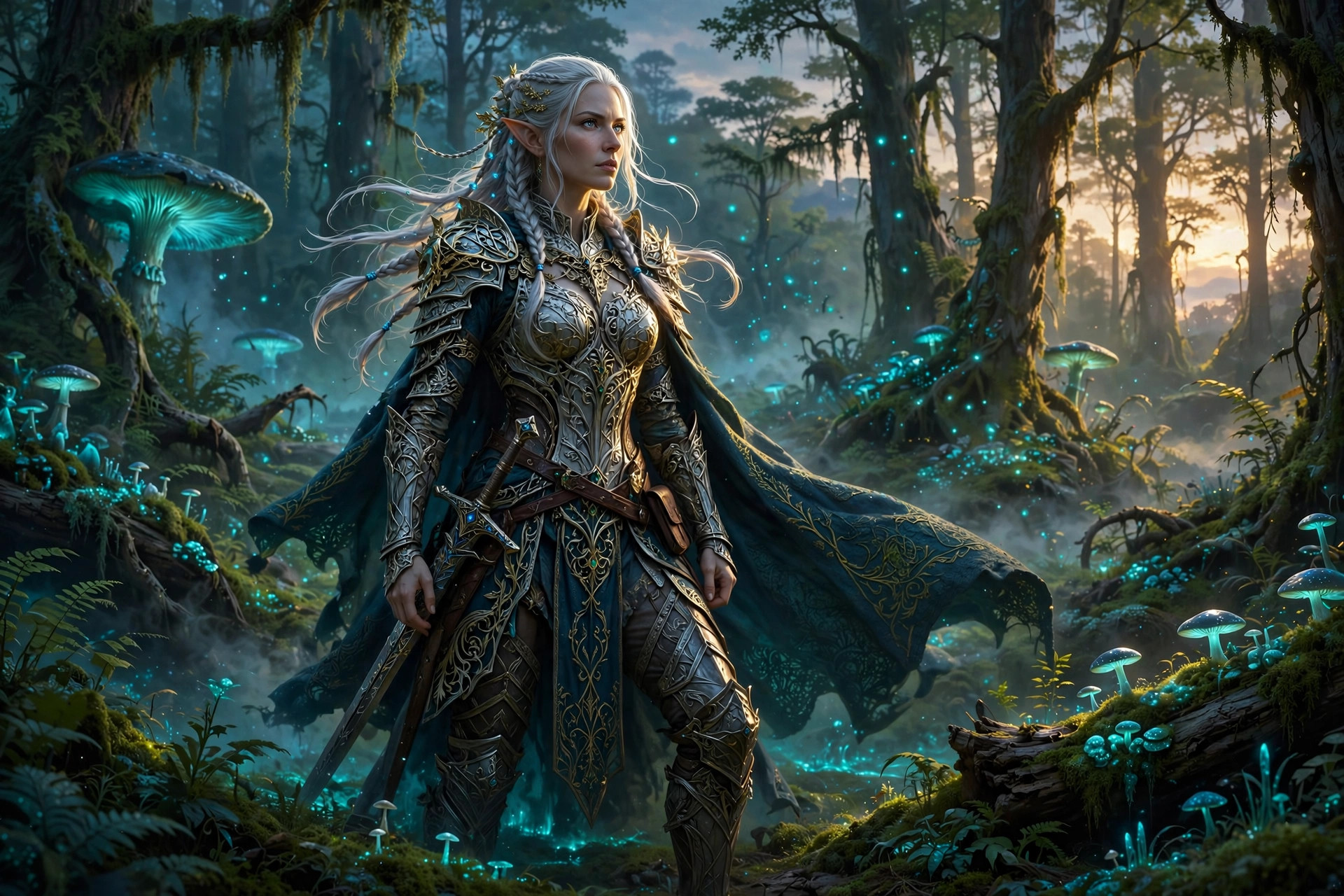
High fantasy — elves, rangers, royalty, mages. The models’ comfort zone: enormous training data from game art and book covers. Keywords: “elven,” “intricate filigree armor,” “ancient forest,” “ethereal glow,” “epic fantasy illustration.”
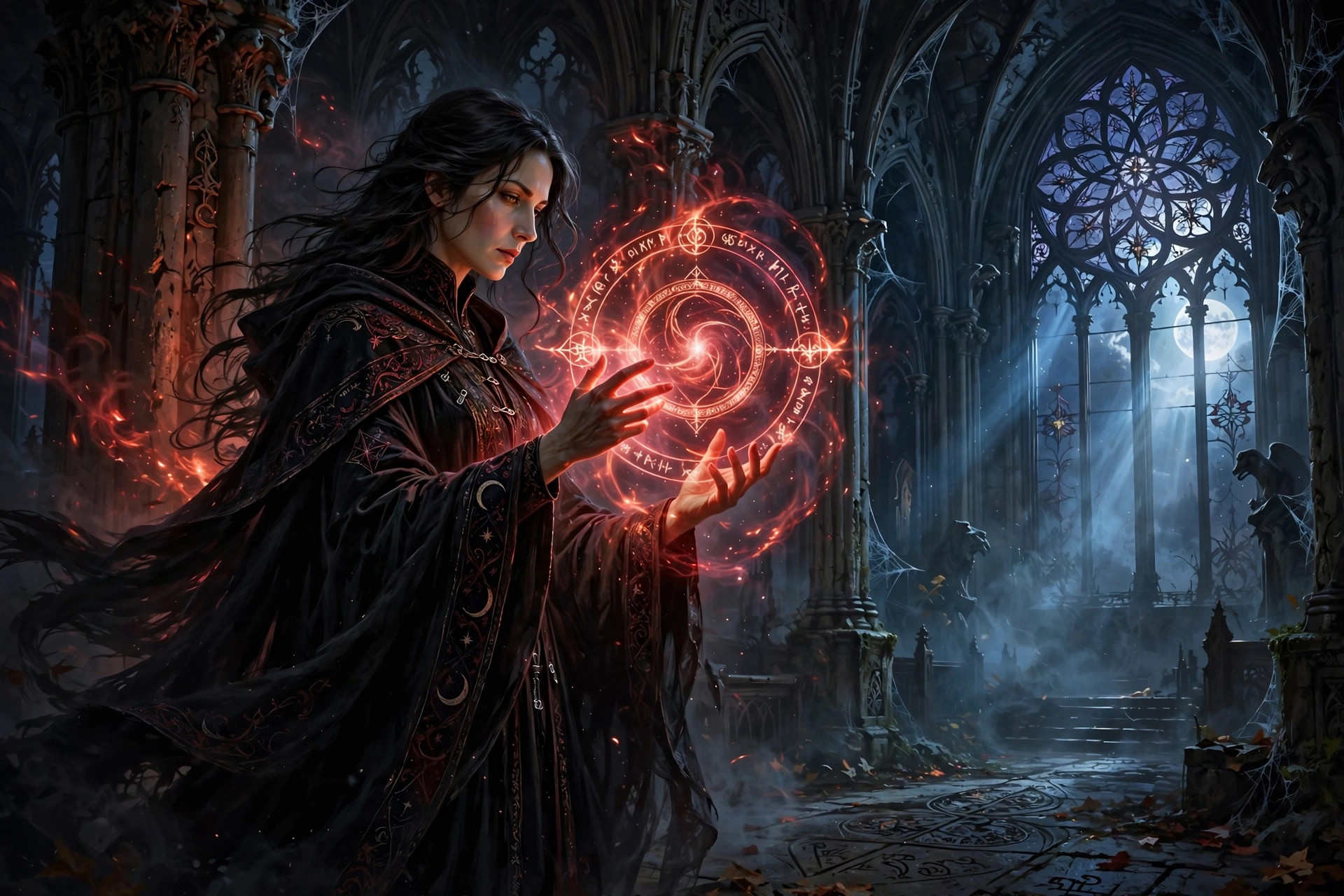
Dark fantasy — sorceresses, vampires, gothic queens, shadow realms. Naturally dramatic lighting does half your work. Keywords: “dark sorceress,” “gothic cathedral,” “moonlit,” “crimson and black,” “dramatic chiaroscuro.”
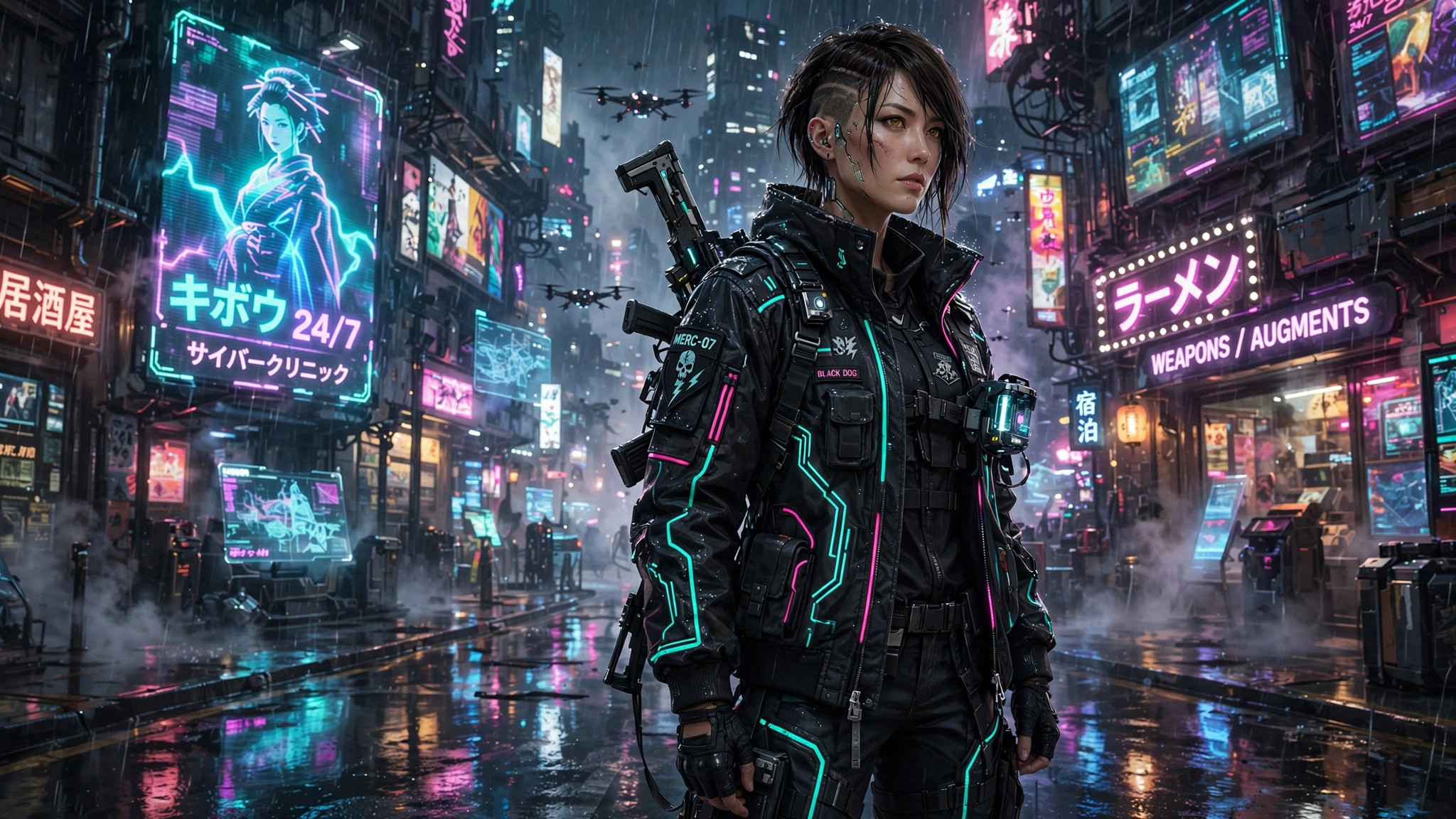
Sci-fi — cyberpunk mercenaries, space operatives, androids, alien worlds. Strong on neon, techwear, and dramatic environments. Keywords: “cyberpunk,” “neon-lit megacity,” “tactical bodysuit,” “holographic,” “cinematic sci-fi.”
Mythic — goddesses, sea spirits, nature guardians, celestial beings. Best for the “powerful and divine” register. Keywords: “goddess,” “marble temple,” “divine radiance,” “flowing silk,” “mythological.”
Monster and creature-heavy concepts (demons, beastfolk, tentacled entities) are the highest-difficulty tier — anatomy failure rates climb steeply with every non-human feature. They’re doable, but budget more iterations and read section 4 first.
2. Prompt Anatomy for Fantasy: A Working Formula
Structure fantasy prompts in this order — character, adult anchors, costume/detail, environment, lighting, style:
“Adult elven warrior woman, mature, athletic build, long silver hair in braids, ornate silver filigree armor with emerald inlays, standing in an ancient bioluminescent forest at dusk, ethereal blue-green glow, cinematic rim lighting, fireflies, epic fantasy digital painting, intricate detail, dramatic composition.”
Why this order: the character and adult anchors go first (identity and age-read are the highest-stakes tokens), costume detail second (fantasy lives in the costume), then environment and lighting (which carry the “fantasy” signal), with the style tag last as a global modifier. Burying the environment at the end is the most common reason fantasy prompts come out looking like studio portraits in costume.
3. Style Keywords That Actually Move the Needle
These are the highest-leverage tokens in fantasy prompting — each one shifts the whole image:
- Material richness: “intricate filigree,” “embossed leather,” “flowing silk,” “jeweled,” “weathered steel” — fantasy costumes read as cheap without material words.
- Light as subject: “bioluminescent,” “ethereal glow,” “god rays,” “neon reflections,” “candlelit” — lighting keywords transform flat renders into art.
- Scale words: “epic,” “towering,” “vast,” “monumental” — sell the world beyond the character.
- Art-historical anchors: “Art Nouveau,” “Baroque drama,” “Frank Frazetta style,” “cinematic key art” — these pull from deep stylistic training data.
- Atmosphere: “mist,” “embers drifting,” “petals in wind,” “underwater light rays” — particulate atmosphere is the difference between a render and a painting.
4. The Fantasy Anatomy Problem (And How to Prompt Around It)
Standard AI anatomy issues — hands, limbs, faces — get worse with fantasy subjects, because every non-human feature is another thing the model can miscount. Pointed ears become extra ears; horns become antlers; wings attach wrong; tails multiply. The fixes:
- Count features explicitly: “one pair of pointed ears,” “two curved horns,” “a single long tail” — the model counts better when you do.
- Targeted negatives per feature: for elves add “extra ears, deformed ears”; for horned characters “extra horns, asymmetrical horns”; for winged “extra wings, torn wings, deformed wings.”
- Keep poses simple for complex creatures: a standing or seated pose with one non-human feature renders far more reliably than an action pose with three.
- Fix in passes: generate the character clean first, then use inpainting for the fantasy features rather than demanding everything in one generation. Our editing tools guide covers the workflow.
5. Keeping Fantasy Characters Unambiguously Adult
This is the most important section. Fantasy art styles — especially anime-adjacent and “ethereal beauty” aesthetics — skew youthful by default in model outputs. When the genre’s whole visual language trends young, you must counter it deliberately in every prompt:
- Explicit adult anchors in every prompt: “adult woman,” “mature,” “in her thirties” — never rely on the model’s defaults.
- Adult signifiers in description: mature facial structure, defined jawline, adult proportions — describe adulthood, don’t assume it.
- Watch the style modifiers: words like “petite,” “youthful,” “innocent,” “loli-adjacent aesthetics” pull outputs younger — avoid them entirely.
- Review every output: if a generation reads as underage or ambiguous, delete it and adjust the prompt. No keeper is worth the alternative.
The rule is absolute: fictional adults only, and “reads as adult” is the minimum bar, not “could arguably be adult.” When in doubt, regenerate with stronger adult anchors.
6. Three Ready-to-Use Prompt Recipes
Elven ranger (high fantasy): “Adult elven woman ranger, mature, athletic, long auburn hair in a warrior’s braid, one pair of pointed ears, fitted leather and leaf-mail armor with intricate embossing, standing in a misty ancient redwood forest, god rays through canopy, ethereal green-gold light, epic fantasy digital painting, intricate detail — Negative: extra ears, deformed ears, youthful, childlike.”
Cyberpunk operative (sci-fi): “Adult woman cyberpunk mercenary, mature, confident expression, short black asymmetrical hair, tactical techwear bodysuit with neon piping, holographic city street at night in rain, neon reflections on wet pavement, cinematic rim lighting, Blade Runner atmosphere, ultra-detailed sci-fi key art — Negative: extra limbs, deformed hands, youthful.”
Sea goddess (mythic): “Adult sea goddess, mature, powerful serene expression, long flowing dark hair with pearls, translucent flowing silk robes with gold jewelry, standing in a marble temple flooded with ocean light, bioluminescent water, divine radiance, mythological oil painting, Baroque drama — Negative: extra arms, deformed hands, youthful, childlike.”
Test these on SpicyLab’s AI porn generator — the free watermark-free Standard trial per IP needs no signup, so iterating on the recipes costs nothing.
Fantasy Subgenres Compared
| Subgenre | Example Subjects | Key Prompt Tokens | Difficulty | Watch Out For |
|---|---|---|---|---|
| High fantasy | Elves, rangers, mages, royalty | filigree, ethereal, ancient forest | Easy | Ear duplication; youthful skew |
| Dark fantasy | Sorceresses, vampires, gothic queens | chiaroscuro, moonlit, crimson | Easy–Medium | Over-dark exposures; horn miscounts |
| Sci-fi | Cyberpunk ops, androids, pilots | neon, holographic, tactical | Medium | Techwear detail mush; extra fingers on gloves |
| Mythic | Goddesses, spirits, celestials | divine radiance, marble, silk | Medium | Extra limbs on multi-arm deities — count explicitly |
| Creature-heavy | Demons, beastfolk, monsters | Feature-specific tokens | Hard | Anatomy failure rates climb per feature — iterate |
7. The Boundary: Fictional Adults, Always
Fantasy doesn’t relax the rules — it raises the bar for diligence, because stylized art can blur age reads. Every character must be an unambiguously fictional adult; every scenario consensual in fiction. Never generate real-person likenesses, never anything involving minors, and delete anything ambiguous on sight. Use SpicyLab only with fictional adults and consent.
FAQ
What are the best fantasy styles for AI porn prompts?
High fantasy (elves, rangers), dark fantasy (sorceresses, gothic), sci-fi (cyberpunk, space operatives), and mythic (goddesses, spirits) have the deepest training data and most reliable output. Creature-heavy concepts work but need more iterations and targeted negative prompts per non-human feature.
How do I keep fantasy AI characters looking adult?
Use explicit adult anchors in every prompt — “adult woman,” “mature,” age cues — and describe adult facial structure and proportions. Fantasy aesthetics skew youthful by default, so counter it deliberately; avoid words like “petite” or “youthful,” and delete anything that reads ambiguous.
Why do my fantasy generations have extra ears, horns, or limbs?
Every non-human feature is something the model can miscount. Count features explicitly (“one pair of pointed ears,” “two horns”), add targeted negatives per feature (“extra ears, deformed ears”), keep poses simple for complex creatures, and consider adding fantasy features via inpainting in a second pass.
What style keywords work best for fantasy AI art?
Material words (filigree, embossed leather, flowing silk), light-as-subject words (bioluminescent, god rays, neon reflections), scale words (epic, towering), art-historical anchors (Art Nouveau, cinematic key art), and atmosphere (mist, embers, petals). Environment and lighting carry the fantasy signal more than character description does.
Should I use the same character description across fantasy generations?
Yes — lock a character description you like, then vary only environment and lighting keywords across generations. This builds a consistent character across a fantasy series and isolates what each prompt change actually does.
Where can I test fantasy prompts for free?
SpicyLab’s AI porn generator offers one free watermark-free Standard trial per IP with no signup — enough to test the recipes in this guide at zero cost. Paid access is one-time $19.99 credit packs with no subscription. Use SpicyLab only with fictional adults and consent.